2026 Federal Tax Brackets: Keep AGI in 22% Tier
Advertisements
Federal Income Tax Brackets explains how federal tax brackets work and how eligible deductions, retirement contributions, and income planning can affect your tax situation.
The IRS has confirmed the official 2026 thresholds, making it possible to plan with published figures rather than preliminary estimates.
The 2026 federal income tax brackets establish how different portions of taxable income are taxed in the United States, helping individuals understand their marginal rates and estimate potential federal income tax obligations.
For taxpayers aiming to remain within the 22% marginal bracket, the important consideration is taxable income rather than adjusted gross income alone. Standard or itemized deductions may reduce taxable income after AGI is calculated.
Understanding this distinction, reviewing available tax benefits, and considering eligible retirement contributions can help taxpayers make informed decisions without assuming that entering a higher bracket increases the tax rate on all their earnings.
Navigating the 2026 Federal Income Tax Brackets Landscape
The Internal Revenue Service has published the official 2026 federal income tax brackets, with inflation-adjusted thresholds that apply to income earned during the 2026 tax year.
Federal individual income tax continues using seven marginal rates: 10%, 12%, 22%, 24%, 32%, 35%, and 37%. The applicable thresholds depend on the taxpayer's filing status.
These brackets are used to calculate federal income tax on taxable income, making it important to distinguish total earnings, adjusted gross income, deductions, and the amount ultimately subject to ordinary income tax.
Understanding the 22% Tax Tier and Its Implications
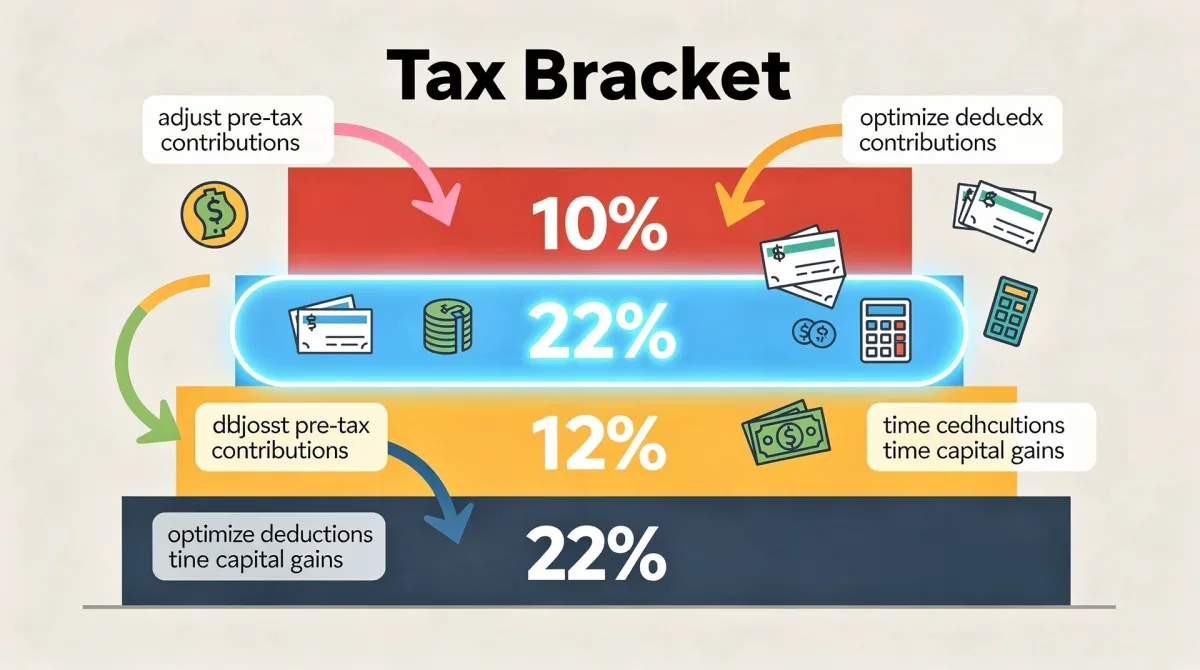
The 22% marginal tax bracket applies to a specific portion of taxable income, rather than automatically determining the rate paid on a taxpayer's entire income.
For example, a single taxpayer with taxable income slightly above the 22% bracket's upper threshold generally pays the 24% marginal rate only on the portion exceeding that threshold.
Understanding this structure is an important part of personal finance because it helps taxpayers evaluate decisions without overestimating the consequences of crossing into a higher marginal bracket.
Projected Income Thresholds for 2026
The IRS has already confirmed the relevant thresholds, so taxpayers no longer need to rely on projected figures when reviewing the 2026 federal income tax brackets.
For single filers, the 22% bracket applies to taxable income exceeding $50,400 and not exceeding $105,700. Married couples filing jointly enter this bracket above $100,800, with an upper threshold of $211,400.
Heads of household enter the 22% bracket above $67,450, with an upper threshold of $105,700. These figures relate to taxable income after applicable deductions, not simply gross annual earnings.
Single: 22% marginal bracket above $50,400 through $105,700 in taxable income.
Married Filing Jointly: Above $100,800 through $211,400.
Head of Household: Above $67,450 through $105,700.
Married Filing Separately: Above $50,400 through $105,700.
Key Strategies to Manage Adjusted Gross Income (AGI)
Adjusted gross income is calculated by subtracting qualifying adjustments from total income, and it plays an important role in determining eligibility for certain tax benefits.
However, staying within the 22% bracket involves evaluating taxable income, which generally reflects AGI after applicable standard or itemized deductions and other eligible deductions.
When reviewing the 2026 federal income tax brackets, taxpayers should understand which financial decisions reduce AGI, which reduce taxable income, and which directly reduce the final tax liability.
Maximizing Pre-Tax Contributions
Traditional workplace retirement contributions can reduce current taxable wages, making them useful for eligible employees who want to build retirement savings while managing their federal tax obligations.
For 2026, the general employee contribution limit for 401(k), 403(b), and most governmental 457 plans is $24,500, with additional catch-up limits available to qualifying participants.
Traditional IRA deductions depend on eligibility and income, while Health Savings Account contributions offer separate tax advantages for individuals meeting applicable HSA requirements.
Traditional 401(k) and 403(b): Eligible pre-tax contributions generally reduce current taxable wages.
Traditional IRA: Contributions may be deductible depending on income and workplace retirement plan coverage.
Health Savings Account: Eligible contributions may receive favorable tax treatment under HSA rules.
Flexible Spending Account: Qualifying salary reductions may provide tax benefits for eligible expenses.
Leveraging Deductions and Credits for Tax Optimization
Federal deductions and tax credits serve different purposes, making it important to understand how each affects the amount ultimately owed under the 2026 federal income tax brackets.
Deductions generally reduce taxable income, while tax credits reduce calculated income tax liability when applicable eligibility conditions are satisfied.
Some tax benefits are subject to income thresholds, filing requirements, or specific expense rules, so taxpayers should confirm eligibility before assuming that an expense automatically creates a deduction or credit.
Itemized vs. Standard Deduction
For 2026, the standard deduction is $16,100 for single filers, $32,200 for married couples filing jointly, and $24,150 for heads of household.
Taxpayers may benefit from standard deduction changes, but those with sufficient qualifying itemized deductions should compare the available amounts before deciding which approach is preferable.
Itemized deductions may include qualifying mortgage interest, charitable contributions, certain medical expenses, and eligible state and local taxes, subject to applicable rules and limitations.
Key Tax Credits to Consider
Tax credits can reduce federal income tax liability directly, making them potentially valuable even when they do not change the taxpayer's marginal income tax bracket.
Eligibility varies according to the credit, with requirements involving income, dependents, education expenses, retirement contributions, or other qualifying circumstances.
When planning around the 2026 federal income tax brackets, taxpayers should distinguish credits from deductions and confirm whether individual benefits remain available for the relevant tax year.
Child Tax Credit: Available to qualifying taxpayers under applicable dependent and income rules.
Child and Dependent Care Credit: May apply to eligible care expenses.
Education Credits: Include the American Opportunity Tax Credit and Lifetime Learning Credit for qualifying taxpayers.
Retirement Savings Contributions Credit: Available when eligibility requirements are satisfied.
Strategic Income Deferral and Timing for 2026
The timing of income recognition and deductible expenses can influence taxable income, although the opportunities available depend on employment arrangements and applicable tax rules.
Employees generally cannot freely choose when earned compensation is taxable, while certain retirement arrangements or legitimate business accounting methods may provide additional flexibility.
Taxpayers considering the 2026 federal income tax brackets should evaluate timing decisions carefully, including the possibility that deferring income could simply shift tax obligations into another year.
Delaying Income and Accelerating Deductions
Some taxpayers may have legitimate opportunities to defer eligible compensation or manage the timing of deductible expenses, depending on the relevant tax rules and financial circumstances.
However, simply postponing access to money does not necessarily delay taxation, and prepaid expenses are not automatically deductible in the year they are paid.
Before making year-end changes, consider projected income in both years, eligibility limitations, and whether the strategy produces meaningful savings rather than unnecessary financial complications.
The Role of Investment Strategies in Tax Planning
Investment income can influence federal tax calculations because interest, dividends, and realized capital gains may contribute to adjusted gross income and overall tax liability.
Short-term capital gains are generally taxed at ordinary income tax rates, while qualifying long-term capital gains and dividends may receive preferential federal tax treatment.
Integrating investment decisions with the 2026 federal income tax brackets can support long-term financial planning, but tax considerations should not override appropriate diversification and investment risk management.
Tax-Efficient Investment Vehicles
Tax-advantaged accounts, including eligible retirement accounts and HSAs, can provide favorable treatment for investment earnings or contributions when statutory requirements are met.
Municipal bond interest may also receive federal income tax advantages, although tax treatment varies by security and the investor's circumstances.
When evaluating a tax-efficient investment strategy, consider investment expenses, risk, liquidity, and personal goals alongside potential effects on taxable income.
Importance of Professional Financial Guidance
Federal tax planning can become complicated when taxpayers have multiple sources of income, investments, business activities, retirement distributions, or significant changes in household circumstances.
Qualified tax professionals can help explain how the 2026 federal income tax brackets apply to an individual situation and identify deductions, credits, and reporting obligations that require attention.
Professional guidance can also be useful when evaluating whether a proposed strategy complies with current law and produces a worthwhile benefit after accounting for costs and financial consequences.
When to Seek Expert Advice
Taxpayers with self-employment income, rental properties, large investment transactions, or complicated retirement arrangements may benefit from consulting an appropriately qualified professional.
Additional guidance may also be valuable when addressing major life changes, including marriage, divorce, retirement, business ownership, or changes in filing status.
Seeking assistance before completing significant financial transactions can provide more planning flexibility than waiting until the annual tax return preparation period.
Staying Informed on Future Tax Law Changes

Federal tax laws and inflation-adjusted thresholds can change through legislation, administrative guidance, and annual updates issued by the Internal Revenue Service.
The official 2026 federal income tax brackets were published in 2025, replacing earlier forecasts and providing confirmed figures for taxpayers preparing their 2026 financial plans.
Taxpayers should monitor official updates for additional guidance affecting deductions, credits, reporting requirements, and provisions applicable to the 2026 tax year.
Resources for Timely Updates
The IRS website provides official tax publications, instructions, filing resources, and announcements that explain federal income tax requirements and available benefits.
For confirmed figures, consult the official IRS Internal Revenue Bulletin containing the 2026 inflation-adjusted tax tables, which documents the applicable ordinary income brackets and standard deductions.
Taxpayers can also review relevant IRS publications or consult qualified professionals when evaluating changes that may influence their income, deductions, credits, and tax reporting obligations.
Key Point | Brief Description |
|---|---|
AGI Management | Eligible adjustments can reduce AGI, while standard or itemized deductions generally affect taxable income. |
Pre-Tax Contributions | Traditional workplace retirement contributions and qualifying savings arrangements may provide current tax advantages. |
Deductions & Credits | Deductions generally reduce taxable income, while eligible credits reduce tax liability directly. |
Expert Guidance | Qualified professionals can help evaluate individual tax circumstances and applicable planning opportunities. |
Frequently Asked Questions About 2026 Federal Tax Brackets
What are the primary factors influencing the 2026 Federal Income Tax Brackets?▼
The 2026 federal income tax brackets reflect inflation adjustments and federal legislation governing individual income taxes. The IRS has already published the applicable thresholds, including the 22% bracket for single taxpayers with taxable income above $50,400 through $105,700 and married couples filing jointly above $100,800 through $211,400.
How can I estimate my AGI for 2026 to plan for the 22% tier?▼
Begin with projected income from employment, investments, and other taxable sources, then subtract qualifying adjustments to calculate estimated AGI. Next, account for the applicable standard or itemized deductions to estimate taxable income, which determines where ordinary income falls within the federal tax brackets.
Are there new deductions or credits expected for the 2026 tax year?▼
Federal legislation enacted in 2025 introduced or modified several individual tax provisions affecting 2026. Eligibility depends on the specific deduction or credit, and taxpayers should consult current IRS guidance rather than relying on earlier projections or assuming that every announced benefit applies to their circumstances.
What role do investment gains play in staying within the 22% tax tier?▼
Realized investment gains may increase AGI and taxable income. Short-term gains generally face ordinary income tax rates, while eligible long-term gains receive separate preferential rates. Investment decisions should consider tax consequences, holding periods, losses, and overall financial objectives rather than focusing exclusively on one marginal bracket.
When should I start actively planning for the 2026 Federal Income Tax Brackets?▼
Taxpayers can review their financial circumstances throughout 2026 using the IRS's published thresholds. Checking projected taxable income, eligible retirement contributions, deductions, and credits before year-end may provide more opportunities to make informed decisions within applicable legal limits.
Looking Ahead
The official 2026 federal income tax brackets provide taxpayers with confirmed thresholds for evaluating marginal tax rates, estimating taxable income, and planning eligible financial decisions.
Remaining within the 22% bracket depends on taxable income and filing status, while AGI adjustments, deductions, and credits affect different stages of the federal tax calculation.
Continued review of IRS guidance, accurate financial records, and appropriate financial guidance can help taxpayers manage their obligations without assuming that entering a higher tax bracket causes all income to face the higher rate.