AI’s Impact on K-12 Curriculum 2026: Educator’s Guide
Advertisements
Latest developments on The Impact of AI on K-12 Curriculum in 2026: What Educators Need to Know Now, with key facts, verified sources and what readers need to monitor next in Estados Unidos, presented clearly in Inglês (Estados Unidos) (en-US).
The Impact of AI on K-12 Curriculum in 2026: What Educators Need to Know Now is shaping today’s educational agenda with new details released by academic institutions and tech innovators. This update prioritizes what has changed, why it matters, and what to watch next, in a straightforward news format.
As we approach 2026, the integration of artificial intelligence into K-12 education is no longer a distant concept but an imminent reality. Educators across the United States are grappling with how to adapt their teaching methodologies and curriculum design to harness AI’s potential effectively. Understanding the multifaceted implications of this technological shift is paramount for preparing students for a future increasingly influenced by AI.
This article provides a comprehensive overview of The Impact of AI on K-12 Curriculum in 2026: What Educators Need to Know Now, drawing on expert analyses and emerging trends. It aims to equip educators with the knowledge needed to navigate this transformative period, focusing on practical considerations and strategic planning.
Understanding AI’s Role in K-12 Education by 2026
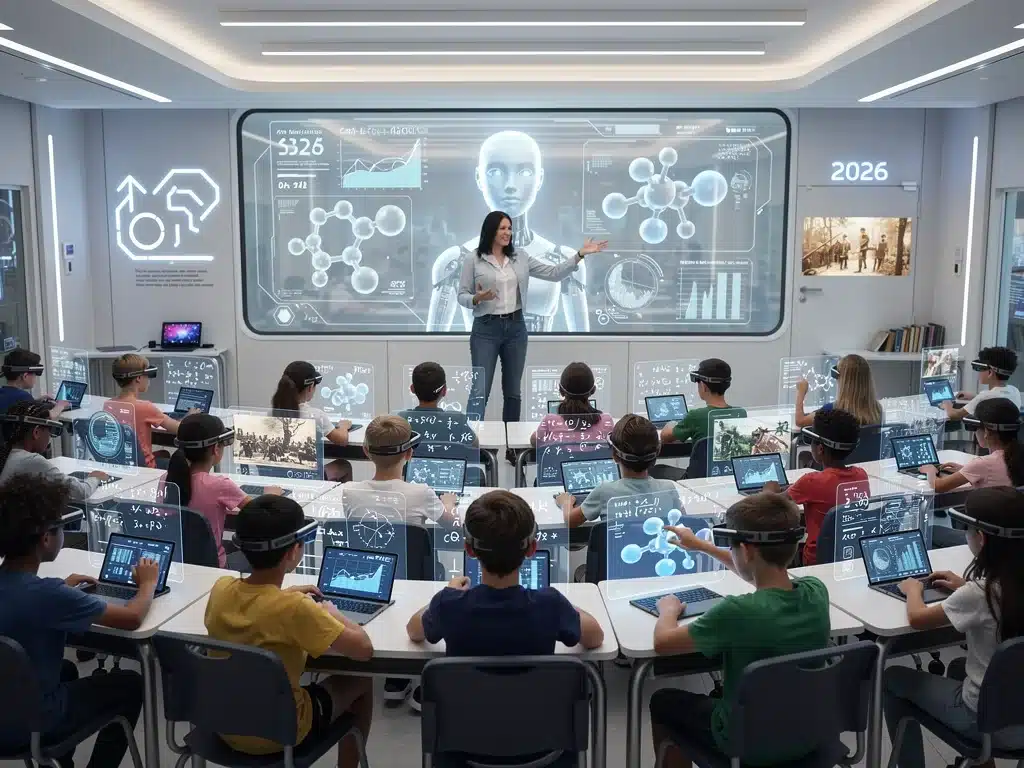
By 2026, AI is expected to revolutionize K-12 education, moving beyond simple tools to more integrated systems that influence every aspect of learning. This transformation includes personalized learning pathways, intelligent tutoring systems, and automated administrative tasks.
The shift is driven by advancements in machine learning and data analytics, offering unprecedented opportunities to tailor education to individual student needs. This means educators must prepare for a future where AI acts as a powerful assistant, not a replacement.
The profound changes underscore the urgency for educators to understand The Impact of AI on K-12 Curriculum in 2026: What Educators Need to Know Now. It is about foresight and proactive adaptation rather than reactive measures.
Personalized Learning Pathways and Adaptive Technologies
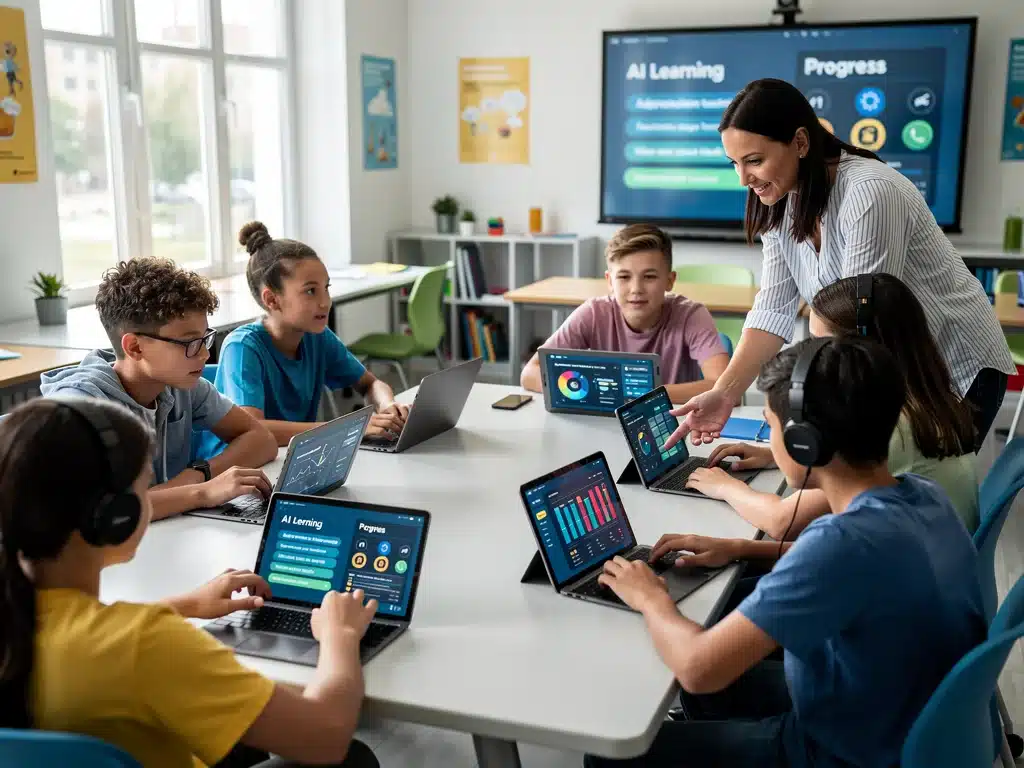
AI’s ability to analyze vast amounts of student data allows for the creation of highly personalized learning experiences. These systems identify individual strengths and weaknesses, adapting content and pace accordingly.
Adaptive technologies powered by AI can provide real-time feedback, suggesting additional resources or remedial exercises as needed. This approach promises to make learning more engaging and effective for a diverse student population.
However, implementing these systems requires careful consideration of data privacy and algorithmic bias, ensuring equitable access and outcomes for all students. This is a critical aspect of The Impact of AI on K-12 Curriculum in 2026: What Educators Need to Know Now.
AI-Driven Content Creation and Curation
AI tools are increasingly capable of generating and curating educational content, from lesson plans to interactive simulations. This can significantly reduce the workload for teachers, allowing them to focus more on direct student interaction.
These tools can also help educators discover and organize high-quality, relevant resources from across the web, ensuring that curriculum content remains current and engaging. The potential for dynamic, evolving curricula is immense.
The challenge lies in critically evaluating AI-generated content for accuracy, pedagogical soundness, and cultural appropriateness, maintaining human oversight in the educational process. This directly influences The Impact of AI on K-12 Curriculum in 2026: What Educators Need to Know Now.
Challenges and Ethical Considerations for Educators
While the promise of AI in education is vast, significant challenges and ethical considerations must be addressed before widespread adoption. These include issues of data privacy, algorithmic bias, and the digital divide.
Educators are on the front lines of these challenges, responsible for both implementing AI tools and teaching students to use them responsibly. This requires a new set of skills and a deep understanding of AI’s societal implications.
Navigating these complexities is central to effectively managing The Impact of AI on K-12 Curriculum in 2026: What Educators Need to Know Now, ensuring that technology serves educational goals ethically.
Data Privacy and Security Concerns
The collection and analysis of student data by AI systems raise significant privacy concerns. Safeguarding sensitive information from breaches and misuse is paramount, requiring robust security protocols and clear policies.
Parents, students, and educators must be informed about how data is collected, stored, and utilized, with transparency being a key factor. Trust in AI systems in education hinges on effective data governance.
Educational institutions need to invest in secure infrastructure and adhere to strict regulatory frameworks to protect student data. This is a non-negotiable aspect of The Impact of AI on K-12 Curriculum in 2026: What Educators Need to Know Now.
Addressing Algorithmic Bias and Equity
AI algorithms are trained on existing data, which can sometimes reflect and perpetuate societal biases. If unchecked, these biases can lead to inequitable educational outcomes, particularly for marginalized student populations.
Educators must be aware of the potential for algorithmic bias and advocate for the development and use of AI tools that are fair and inclusive. Critical evaluation of AI system outputs is essential.
Ensuring equitable access to AI-powered educational resources is also crucial, preventing the digital divide from widening further. This directly impacts The Impact of AI on K-12 Curriculum in 2026: What Educators Need to Know Now.
Preparing Educators for an AI-Integrated Future
The successful integration of AI into K-12 curriculum hinges on adequately preparing educators. This involves comprehensive professional development, fostering AI literacy, and rethinking traditional teaching roles.
Teachers need more than just technical skills; they require a deep understanding of AI’s pedagogical implications and ethical dimensions. This preparation must be ongoing and responsive to rapidly evolving AI technologies.
Ultimately, empowering educators is key to realizing the full potential of The Impact of AI on K-12 Curriculum in 2026: What Educators Need to Know Now, transforming challenges into opportunities for innovation.
Professional Development and AI Literacy
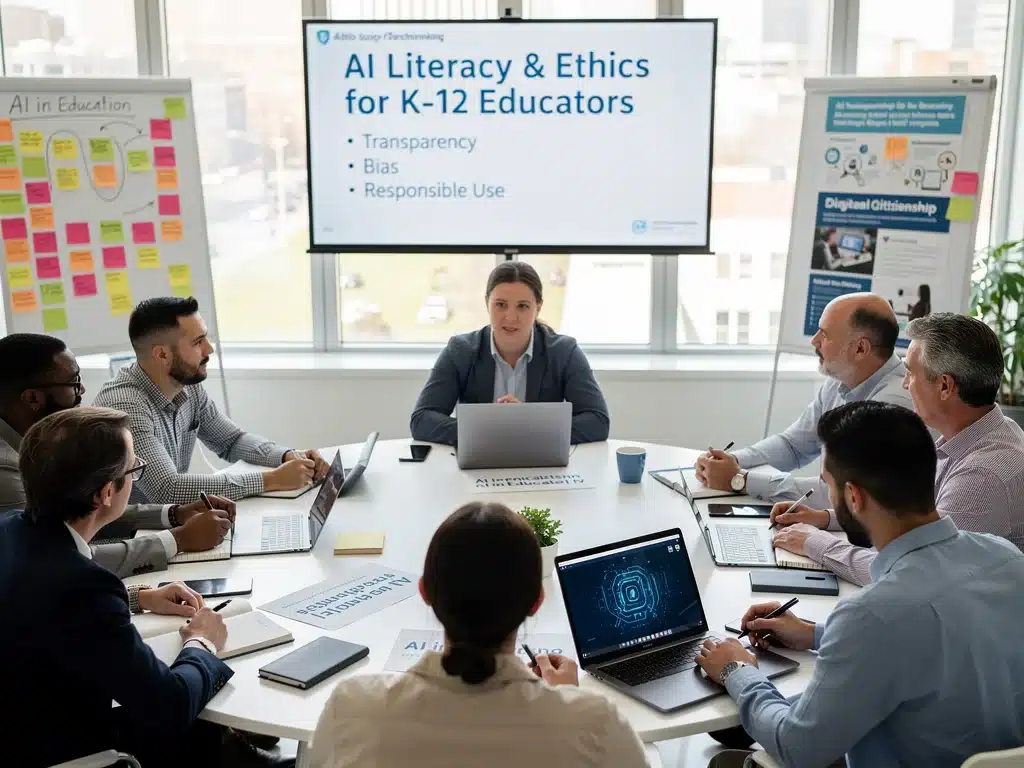
Robust professional development programs are essential to equip educators with the knowledge and skills to utilize AI tools effectively. These programs should cover AI fundamentals, pedagogical applications, and ethical considerations.
AI literacy for educators means understanding how AI works, its capabilities, and its limitations, as well as how to integrate it thoughtfully into their teaching practices. This goes beyond simply using AI software.
Ongoing training and support systems are critical to help educators adapt to new AI technologies as they emerge, fostering a culture of continuous learning. This is a core component of managing The Impact of AI on K-12 Curriculum in 2026: What Educators Need to Know Now.
Rethinking Teacher Roles and Responsibilities
With AI handling more routine tasks, teachers can shift their focus towards higher-order activities such as facilitating critical thinking, fostering creativity, and addressing socio-emotional needs. The role evolves from content delivery to personalized guidance.
Teachers will become curators of learning experiences, mentors, and guides in an AI-rich environment. Their human touch and expertise in navigating complex social dynamics remain irreplaceable.
This evolution requires a re-evaluation of teacher training programs to emphasize these new competencies, ensuring educators are prepared for their expanded roles. This is a significant part of The Impact of AI on K-12 Curriculum in 2026: What Educators Need to Know Now.
Curriculum Adjustments and Skill Development
The advent of AI necessitates significant adjustments to the K-12 curriculum, focusing on developing skills essential for an AI-driven world. This includes computational thinking, critical thinking about AI, and creativity.
Traditional subjects will need to integrate AI concepts, while new interdisciplinary courses may emerge to address AI’s societal implications. The goal is to prepare students not just to use AI, but to understand, critique, and innovate with it.
These curriculum changes are fundamental to ensuring students are future-ready, reflecting the broader implications of The Impact of AI on K-12 Curriculum in 2026: What Educators Need to Know Now.
Integrating AI Concepts into Core Subjects
AI concepts can be woven into various subjects, from mathematics and science to language arts and social studies. For instance, students can explore AI in data analysis in math or discuss AI’s ethical implications in literature.
This integration makes learning more relevant and prepares students for a world where AI is ubiquitous. It moves beyond teaching coding to fostering a deeper understanding of AI’s principles and impacts.
Developing interdisciplinary projects that utilize AI tools can further enhance student engagement and understanding across different domains. This is how The Impact of AI on K-12 Curriculum in 2026: What Educators Need to Know Now manifests practically.
Fostering Human-Centric Skills
As AI automates more tasks, skills unique to humans – such as creativity, critical thinking, emotional intelligence, and complex problem-solving – become even more valuable. The curriculum must prioritize these.
Educators need to design learning experiences that cultivate these human-centric abilities, which AI cannot replicate. This ensures students are equipped for roles that require nuanced human interaction and innovation.
The focus shifts from rote memorization to developing adaptable thinkers capable of navigating uncertainty and leveraging AI as a tool for human advancement. This is a crucial aspect of The Impact of AI on K-12 Curriculum in 2026: What Educators Need to Know Now.
Policy and Infrastructure Requirements for AI Integration
Effective AI integration into K-12 education demands robust policy frameworks and significant infrastructure investments. These elements ensure equitable access, responsible use, and sustainable implementation across all schools.
Policymakers must collaborate with educators, technologists, and ethicists to develop guidelines that address the unique challenges and opportunities presented by AI. This includes funding for technology and professional development.
Without a clear policy roadmap and adequate resources, the potential of The Impact of AI on K-12 Curriculum in 2026: What Educators Need to Know Now may not be fully realized, leading to disparate educational outcomes.
Developing Comprehensive AI Policies in Education
Government agencies and educational boards need to establish clear policies regarding AI use in schools, covering areas like data privacy, algorithmic transparency, and acceptable use guidelines. These policies must be adaptable.
These policies should also address intellectual property rights, academic integrity in the age of AI, and the responsible procurement of AI technologies. A unified approach is essential for consistency.
Regular review and updating of these policies will be necessary as AI technology continues to evolve, ensuring they remain relevant and effective. This is a dynamic part of The Impact of AI on K-12 Curriculum in 2026: What Educators Need to Know Now.
Infrastructure and Funding Needs
Integrating AI effectively requires significant investment in technological infrastructure, including reliable internet access, appropriate hardware, and secure data storage solutions for every school. The digital divide must be closed.
Funding is also crucial for ongoing professional development for educators and for the procurement of high-quality AI educational software. Without adequate resources, many schools will be left behind.
Public-private partnerships can play a vital role in securing the necessary funding and expertise to build a robust AI-ready educational system. This directly impacts The Impact of AI on K-12 Curriculum in 2026: What Educators Need to Know Now.
Future Outlook: AI as a Collaborative Partner in Learning
Looking ahead to 2026 and beyond, AI is poised to become a collaborative partner in the learning process, enhancing human capabilities rather than replacing them. This partnership promises to unlock new pedagogical approaches.
The focus will be on leveraging AI to augment human intelligence, enabling both students and educators to achieve more. This vision requires thoughtful design and continuous adaptation of educational practices.
Embracing AI as a supportive tool for learning and teaching is crucial for shaping the future of education. This is the ultimate goal of understanding The Impact of AI on K-12 Curriculum in 2026: What Educators Need to Know Now.
AI for Enhanced Teacher Productivity and Creativity
AI tools can significantly enhance teacher productivity by automating grading, generating reports, and even assisting with lesson planning. This frees up valuable time for teachers to focus on more impactful interactions with students.
Furthermore, AI can inspire teacher creativity by providing new ways to present information, design engaging activities, and differentiate instruction based on real-time student performance data.
Teachers can use AI as a creative assistant, helping them to explore innovative teaching methods and personalize their approach to education. This is a practical application of The Impact of AI on K-12 Curriculum in 2026: What Educators Need to Know Now.
Student Agency and AI-Powered Exploration
AI can empower students to take greater agency in their learning journey, offering tools for self-directed exploration and discovery. Students can use AI to research complex topics, experiment with simulations, and receive tailored support.
This fosters a more active and inquiry-based learning environment, where students are encouraged to ask questions, pursue their interests, and develop problem-solving skills with AI as a resource.
The goal is to cultivate independent learners who can effectively leverage AI as a tool for knowledge acquisition and creative expression. This represents a significant aspect of The Impact of AI on K-12 Curriculum in 2026: What Educators Need to Know Now.
| Key Point | Brief Description |
|---|---|
| Curriculum Evolution | AI will drive shifts towards personalized learning and human-centric skills. |
| Educator Preparation | Professional development in AI literacy and ethical use is essential for teachers. |
| Ethical Concerns | Data privacy and algorithmic bias require careful policy and oversight. |
| Policy & Infrastructure | Robust policies and funding are needed for equitable and effective AI integration. |
Frequently Asked Questions About AI in K-12 Education
The primary impact will be the widespread adoption of AI for personalized learning, adaptive assessments, and automated administrative tasks. This aims to tailor education to individual student needs, making learning more efficient and engaging across various subjects.
Educators should engage in continuous professional development focused on AI literacy, ethical considerations, and practical applications. Understanding AI’s capabilities and limitations, and adapting teaching methodologies to leverage AI tools effectively, will be crucial for success.
Key ethical challenges include ensuring student data privacy, mitigating algorithmic bias in learning tools, and addressing the potential for a widening digital divide. Transparent policies and equitable access are vital to overcome these concerns.
No, AI is not expected to replace teachers. Instead, it will serve as a powerful assistant, automating routine tasks and providing data-driven insights. This shift allows teachers to focus more on higher-order skills, emotional support, and personalized mentorship.
Students will need to develop strong critical thinking, creativity, problem-solving, and AI literacy skills. The curriculum will emphasize understanding AI’s principles, ethical implications, and its application as a tool for innovation and complex human tasks.
Impact and Implications
The profound implications of The Impact of AI on K-12 Curriculum in 2026: What Educators Need to Know Now extend far beyond the classroom, shaping the future workforce and societal norms. It is imperative for all stakeholders – educators, policymakers, parents, and students – to remain engaged and informed about these developments.
Continuous dialogue, research, and adaptive strategies will be necessary to harness AI’s benefits while safeguarding against its potential pitfalls. The successful integration of AI into K-12 education will ultimately depend on a collaborative and forward-thinking approach.
As AI continues its rapid evolution, staying abreast of emerging trends and best practices will be key to ensuring that educational systems are robust, equitable, and future-proof. The journey is ongoing, and vigilance is paramount.